Research Article | | Peer-Reviewed

Assessing Bank Success Factors in Bangladesh Through the DuPont Model

Received: 2 March 2026     Accepted: 17 March 2026     Published: 30 March 2026
Views:       Downloads:
Abstract

Using a random effects panel regression model, this study looks at how bank-specific and macroeconomic factors affect the financial performance of commercial banks, as measured by return on equity (ROE). The results, which are based on 105 observations from 21 banks, show that capital adequacy, management efficiency, and liquidity quality all have a positive and statistically significant effect on ROE. Management efficiency is the most important factor, which shows how crucial useful management is for making banks more profitable. But the quality of assets and earnings doesn't have significant impacts on ROE. The unemployment rate has an enormous detrimental impact on how well banks do, which means that bad job market conditions hurt their profits. Conversely, GDP growth and stock market performance exert no influence. The Breusch–Pagan test confirms the use of a panel model, and the Hausman test confirms that the random effects specification is appropriate. The model explains about 41% of the changes in ROE, which has substantial impacts on banking sector performance for both policy and managerial decisions. The research adds to the body of knowledge about banking and finance by giving real-world examples from a developing economy and giving useful information to bank managers, investors, and policymakers. Strengthening managerial effectiveness and optimizing capital structures can enhance profitability and resilience, particularly amid economic fluctuations and competitive market conditions.

Published in Journal of Finance and Accounting (Volume 14, Issue 2)
DOI 10.11648/j.jfa.20261402.12
Page(s) 88-100
Creative Commons

This is an Open Access article, distributed under the terms of the Creative Commons Attribution 4.0 International License (http://creativecommons.org/licenses/by/4.0/), which permits unrestricted use, distribution and reproduction in any medium or format, provided the original work is properly cited.

Copyright

Copyright © The Author(s), 2026. Published by Science Publishing Group

Keywords

DuPont Analysis, Financial Performance, Bank Profitability, Capital Adequacy, Managerial Efficiency

1. Introduction
Banking means taking deposits of money from the public for the purpose of lending or investing, and then giving them back on demand or in some other way, as well as letting people take their money out by check, draft, order, or other means in the section 5(p) of Bangladesh’s bank company act 1991 and banks are financial institutions to perform this banking task by assembling money from the public and relocate the money to the public and offer ancillary banking services . So, bank serves as an intermediary to transfer the money from surplus sections to deficit sections . A bank appears as the heart in the economy, and the capital flows into the economy like blood in the body. Continuous flowing blood in every organ keeps body alive and strong, but when the flow stops to any organ, the organ stops working. In the same way, without financial resources industries and firms cannot survive from this perspective, banks are the foundation for economic growth and the financial system dominating in the emerging country while in the developed country alternative financial organization considered as the rivals of the bank because there are many diverse and mature financial institutions.
Bangladesh tactical location between India and Bay of Bengal which draws attention from some global superpowers specially USA and China. Such geopolitical influence instantly influencing its trade, economy and banking sector . While its population size holds eight positions globally and occupies almost 2.13% of the world population so this huge population requires high level of consumption, and this huge consumption generally attracts more investment from new entrepreneurs. The country generally relies on bank based financial system where rising investment increased demand for banking services. To support the country’s development, especially in the ready-made garments sector and other industrial sectors. Bangladesh generally relies on imports of machineries and raw materials for manufacturing. In this system, banks also play a crucial role not only facilitate finance but also reduce the risks and help comply with international rules and regulations. In addition to this, banks contribute a central task to extending the credit in small and medium enterprises (SMEs) and encourage new creative activity. By providing finance in short-term and long-term projects, banks are contributing to generating new employment opportunities and increasing the country’s overall productivity.
A sound banking system is essential for supporting the economic growth that’s why it is essential to evaluate the performance of the bank. Evaluating the financial performance of the bank provides a detailed picture of the banks present and past condition and it is also an indicator which reflects how well a firm can handle its financial difficulties . DuPont model is a useful technique for assessing the bank financial performance . This model serves more insightful evaluation about its effectiveness of finance and utilize the resources. The performance of the bank, however, is influenced by the different factors. A factor means any conditions or variable that affects how well and effectively institutions can handle the resources, control the uncertainty or risks and contribute to the national development. In Bangladesh, where the sound and stable economy largely depends on the efficient functioning of the banking system identifying and analyzing the factors will help to ensure the financial solvency, boosting the investor confidence and support the banking policy maker to take an effective decision for banking industry.
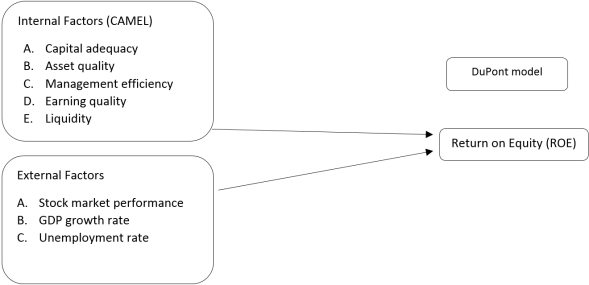
Based on earlier discussion, it is totally agreed that banks are the heart of our country’s economy and based on these, researchers want to carry out an analysis to assess the factors influenced the banks financial success . Evaluating effectiveness and efficiency, banks play a key role which directly impacts managers, shareholders and decision makers . The evaluation of bank financial success is directly influenced by both internal and external factors which determines the profitability and efficiency of the bank . Like all other countries Bangladesh’s bank performance is influenced by several internal and external factors. In terms of internal factors, mainly all scheduled banks in Bangladesh are directed under the Bangladesh bank order 1972 and the Bangladesh bank established CAMEL rating system as a performance evaluation factors for its internal performance. CAMEL acts as an influencing factor for assessing the strength of bank and its uses are increasing in especially financial crisis time . The CAMEL rating systems made up of five key areas these are capital adequacy, asset quality, management efficiency, earning quality and liquidity. In addition, external factors are stock market performance, inflation, GDP growth rate and unemployment rate that indirectly affect the economy of the country and have an impact on the performance of banking industry .
Despite extensive research on assessing bank performance, several research gaps identified when conducting this research. Although research occurred in previous years based on impact of internal and external factors on bank performance. Special focuses were given on internal factors CAMEL rating framework and several macroeconomic variables, particularly GDP and inflation. A few years ago, conducted almost similar study on similar factors based on the Pakistani banks but the study had not focused unemployment rate as the external factors. Moreover, the study did not consider DuPont analysis for performance measurement tool as a dependent variable. In Bangladesh, there has some few research conducted based on this topic. Some research focused on bank profitability while others conducted only internal or only external factors impacting bank performance. In addition, Bangladesh banking sector during the period of 2019-2023 face several weaknesses that significantly impact the behavior of the banking industry such as high amount of non-performing loan, COVID-19 pandemic, political influence in lending decisions and worldwide financial distress as a result higher risk taking did not convert into higher return which ultimately undermines the banks financial soundness. In this identified gap, a clear understanding of the bank success factors can help to strengthen the financial condition and help to support the country’s overall economy. Current research examined solely on specific type of bank to identify bank success factors in Bangladesh combining the factors internal CAMEL rating framework and external (GDP growth, unemployment rate and stock market performance to provide more extensive insight and specific understanding than the previous research. In addition, by focusing on the post COVID-19 shock and subsequent financial distress the research represents a unique phase for policy overview of Bangladesh banking sector.
2. Objective of the Study
The general purpose of the paper is to assess the significant factors that contribute banks success in Bangladesh. More specifically,
1) To investigate the impact of internal factors (capital adequacy ratio, asset quality ratio, management efficiency ratio, earning quality ratio and liquidity ratio), on the DuPont model (ROE) of banking companies in Bangladesh.
2) To examine the influence of external factors such as stock market performance, GDP growth and unemployment on DuPont model (ROE) of commercial banks in Bangladesh.
3. Literature Review
In the previous studies, it is totally observed that both internal and external factors considered as the bank success factors and both internal and external factors impact on the bank performance. According to earlier research it is also found that internal determinants generally consist of several factors such as CAMEL rating (capital adequacy, asset quality, management efficiency, earnings and liquidity), NPL ratio, bank size, operational efficiency and ownership structure. On the other hand, external determinants consist of several macroeconomic variables including GDP growth, interest rate, stock market performance and labor market condition indicated by unemployment rate . Bank profitability is measured by using ROA, ROE and NIM Besides profitability several other indicators used for measuring the performance of a bank such as Tobin’s q, DuPont analysis and balance scorecard . Donaldson Brown, a key financial director in DuPont Treasury division first introduced DuPont model to measure a company’s ability to improve its return on equity . The model includes a three-step model and amplified five step model. In three step procedure, variations computed ROE multiplying by Profit margin, Asset turnover and Equity multiplier . These three elements ratio are expressed below:
ROE = (Net income/Revenue) x (Revenue/Total Assets) x (Total assets/Shareholder equity)
3.1. Impact of Bank-Specific Factors on Bank Performance
This section represents the impact or nexus of internal factors known as CAMEL rating (capital adequacy, asset quality, management efficiency, earning quality and liquidity) on bank performance from previous research viewpoint.
3.1.1. Capital Adequacy Ratio
Capital adequacy ratio mainly means how much capital a company has compared to the total risk weighted assets. Adequate capital serves as a safeguard from the adverse effects of potential loss . Capital adequacy ratio is one of the significant issues in modern banking sector evaluates the efficiency and effectiveness of banks . It is a key factor for assessing the stability and robustness of banking system. A sufficient level of capital adequacy indicates that banks have sufficient funds to expand its operation . In addition, capital adequacy ratio is formulated to determine the bank’s capacity to meet its financial obligation and different types of potential risks including credit risks, market risks, operational risks and others Therefore, supervisory authorities rely on this ratio for measuring the security and safety of the bank’s financial soundness . On the other hand, a high capital adequacy ratio indicates that banks maintain a sound financial stability and can handle the adverse situation more effectively .
In previous research findings show mixed results across different countries. reported that capital adequacy has a significant but indirect effect on bank performance in Pakistani banks. Similarly, studies by demonstrated a significant and positive relationship between capital adequacy and bank profitability in different contexts. found that capital adequacy significantly influences the performance of private banks in Indonesia but has no impact on governmental banks. Research from Malaysia and the UK also confirmed a positive influence of capital adequacy on bank performance. Conversely, they reported a negative and significant impact of capital adequacy on bank performance in their study . So, we hypothesize:
H1 = The CAR has significant positive effect on the performance of bank.
3.1.2. Asset Quality
Within the various bank lending factors, asset quality emerges as the most influential factor for determining the bank lending capacity . Theoretically, asset quality has negative relation with bank performance because it represents the proportion of non-performing assets to the total advance or loans. The higher the asset quality ratio means that banks have more risky assets. Asset quality ratio explains how vulnerable assets are to overall assets. Asset quality dictates the level of credit risk situation in relation to total asset value . Bank instability is high when there is high amount of credit risk . Significant level of credit risk may lead to failure of the banking system . Higher credit risk extends the probability of bank instability when there is high amount of non-performing loans . A significant level of non-performing loans exhibit that bank assets are not in good condition . The outcome reflects some degree of combination. highlighted a significant but indirect relationship between asset quality and bank performance. also reported a significant impact on Malaysian banks. However, and reported no significant relationship in their studies. found a significant positive impact on Indian commercial banks, From the viewpoint of Bangladesh reported that there is insignificant relationship with the performance of Bangladesh’s bank.
We assert that:
H2 = The asset quality has insignificant effect on the performance of bank.
3.1.3. Management Efficiency
Management plays a crucial role to escalate the gross performance of banks Management efficiency refers to the organization ability how efficiently company uses its assets to generate the company’s income. The quality of bank management serves as a measure of its overall efficiency and effectiveness . It is generally assessed by dividing its net income by its total assets. The higher management efficiency indicates the company is performing well to generate its net income with its total assets . Management efficiency is consistently found to influence bank performance positively. demonstrated a significant positive relationship between management efficiency and bank profitability. emphasized that effective management improves performance, particularly in developed countries. Similarly, and reported a positive impact on Malaysian and Tanzanian banks. However, observed a negative and significant relationship, suggesting context-specific variations.
So, we hypothesize:
H3 = The management efficiency has significant positive effect on the performance of bank.
3.1.4. Earning Quality
Return on capital employed can be used to estimate the earning quality. which demonstrates the bank’s capacity to produce earnings before interest and taxes by using its total capital employed and the total capital employed represents a mix of both total shareholders’ equity and total long-term liability . Earning quality mainly determines the steady and sustainable profitability that implies the company’s efficiency, sustainability and future earning capacity. reported a significant positive effect of earnings quality on bank performance. also confirmed its significant impact in Malaysian banks. Moreover, earnings quality has insignificant relationship with Tanzanian banks . we assume:
H4 = The earning quality has significant positive effect on the performance of bank.
3.1.5. Liquidity
Business liquidity reflects business capability of converting its asset into cashflow. It is an indicator of the company’s ability to pay its short-term liabilities . Risk management theory suggests that maintaining adequate liquidity reduces the probability of financial hardship, thereby enhancing investor confidence. Inadequate liquidity can lead to collapse and threaten the banks’ survival . In stable environment, it allows the banks to maintain higher bank liquidity, and it strengthens the bank capacity to lend more . But excess liquidity can restrain to pay higher return . Since, unused funds should be invested in productive ventures . Therefore, sometimes keeping lower liquidity can lead to higher profitability from the bank . One of the easiest tools to determine liquidity is current ratio . It is generally calculated by dividing the current assets by its current liabilities. reported that liquidity has a strong but indirect effect on bank performance. found a significant positive impact on profitability, while reported that lower liquidity has negative effects on bank profitability. confirmed its significant positive effect in Malaysia, whereas found liquidity insignificant in Tanzania. highlighted a significant positive relationship. We postulate:
H5 = There is significant positive relationship with liquidity and the performance of banks.
3.2. Impact of Macro-Economic Factors on Bank Performance
This section represents the macroeconomic factors such as GDP growth rate, stock market performance, and unemployment rate.
3.2.1. GDP Growth Rate
GDP growth rate mainly means how much country’s total economy has expanded in a particular period. Growth in the economy, as measured by GDP, typically enhances the production capacity of the country . GDP leads to higher level of saving increases the deposit of the bank which gives banks more money to work with and lets them fund more investment projects . It leads to benefits of the bank by engaging in more business and higher earnings. which positively improved the bank profitability . It is found that there is a significant positive relationship between GDP growth and bank performance . It is also confirmed by . Conversely found no significant or negative effect.
So, we assert:
H6 = GDP growth has significant positive impact on the performance of banks
3.2.2. Stock Market Performance
Stock market performance measures the overall financial health of banking industry in the country. Stock market considers as a mirror to determine the financial status of the country economy i.e. a healthy stock market indicates that the country’s economic foundation is strong, investors are confident and the business are profitable where a poor stock market condition indicates the instability and weakness of the country economy When the performance of the stock market is good. it generally increases the firms and industry confidence to raise the more capital from the capital markets and banks can earn higher income from them by providing the underwriting, advisory services and brokerage services on the other hand when the stock market performed well this can reduces the bank lending volume and interest incomes because that time firms generally prefer issue share instead of borrowing from the banks. highlighted in the previous that stock market performance has significant positive relationship with bank performance and net profit margin and stock price do not affect stock prices in Indonesia . Besides, Mitra, Gupta & Gupta (2023) found that liquidity does not significantly impact the financial performance of Indian banks . So, the results of previous studies are not conclusive.
We posit:
H7 = The stock market performance has significant positive effect on the performance of banks
3.2.3. Unemployment Rate
Unemployment rates mean percentage of people who can do the work but not finding their jobs. There is a strong correlation between economic activity and unemployment, Higher level of unemployment means economy is slowing down It has totally opposite relation with bank performance. If unemployment rate increases, there will be increasing the default bank loan risk concurrently reduces the bank overall profitability. So, unemployment rates negatively impact bank performance. showed a significant negative impact on return on assets, while reported a negative influence on bank profitability. The relevant hypothesis is
H8 = The unemployment has significant negative impact on the performance of bank
3.2.4. Conceptual Framework
Figure 1. Conceptual Framework.
4. Data and Methods
4.1. Sample Selection
The study seeks to assess the Bank Success factors in Bangladesh through the DuPont Model. The population of this study consists of 35 banks listed in Dhaka stock exchange (DSE) until 2023. From this population, a sample of 21 banks (60%) 5-year data and total 105 observations were selected for this analysis and small population more than 50% considered a large fraction in this study which can enhance the validity and reliability of the findings. In addition, stratified sampling method was used to ensure adequate representation. The population were stratified into three categories – Islamic sharia-based bank, private commercial bank and public banks for the purpose of representing each operational model in these sectors.
4.2. Sources of Data
The research was conducted based on secondary data and the dataset covering the five-year period from 2019-2023. The data were collected from audited annual financial reports of sample banks listed in Dhaka stock exchange (DSE) and the external data were collected from world banks and statistical official websites. In addition, annual reports attained directly from the official websites of the respective banks and the online database of Dhaka stock exchange and Lanka Bangla Financial portal. The benefits of employing secondary information in research include that it allows the researchers to take more flexible approach. . It ensures the larger sample size and helps the researcher to complete the research in efficient time . While the use of secondary data offers several benefits, it is also accompanied by certain limitations at first it might not include all the relevant information for research purposes . In secondary data, researchers have few opportunities to correct the mistakes and limited control over the data collection process . Despite these challenges our study tried to implement the reliability, authenticity and credibility of the secondary data collected from the audited financial statements which are prepared in accordance with International Financial Reporting standards (IFRS). Besides, additional data was collected from reputational international and regional organizations including the world bank, Dhaka stock exchange (DSE), statistical and Lanka Bangla Financial portal to ensure robust and authentic data.
Table 1. Operational definition of variables.

Num

Variable type

Symbol

Variables

Measurement

1

Dependent variable

ROE

Return on equity*

Integrating net profit margin, asset turnover and equity multiplier

2

Independent variable

Cap_Ad

Capital adequacy ratio

Proportion of capital (Tier1 capital +Tier2 capital) to risk weighted asset

3

Asset_Q

Asset quality ratio

Proportion of non-performing assets to total loans or advances.

4

Manege_E

Management efficiency ratio

Proportion of net income to total assets.

5

Earn_Q

Earnings quality

Proportion of earning before interest and taxes to total capital employed.(Total equity +Long term liability)

6

L_Qd

Liquidity ratio

Proportion of current asset to current liability

7

GDP

Gdp growth rate

Annual growth of GDP

8

St_Mp

Stock Market performance

Annual stock market capitalization index

9

A_Une

Unemployment rate

Annual unemployment rate

Source: Authors compilation
*ROE = Net profit margin1 x Asset turnover ratio2 x Equity multiplier3. 1. Net profit margin = Proportion of net income to total revenue; 2. Asset turnover ratio= Proportion of total revenue to total assets; 3. Equity multiplier = Proportion of total assets to shareholder equity
4.3. Regression Model
The researcher used regression model based on panel data to examine the success factors of banks which are mixed with CAMEL framework and macroeconomic variables (GDP growth rate, inflation rate, stock market performance and unemployment rate). The researcher first collects the data by using the Microsoft excel and then export it in the SPSS 20 and SATA 15.0 software for panel data analysis. Panel data analysis employs three widely utilized models: random-effects models, fixed effects models, and pooled ordinary least squares (OLS) models in this study, random effects model was considered most appropriate among others. To verify the appropriateness and reliability of the model Bruech Pagan test ‍and Hausman Test were used where The Breusch-Pagan test is considered as an effective tool to identify heteroskedasticity among cross-sectional units. and Hausman test was used to determine the most appropriate regression model .
To capture both firm-specific and time-specific effects, the study utilized panel regression models under both Fixed Effects (FE) and Random Effects (RE) specifications. The general model can be expressed as:
Y_(ROE)bt0+ β1Cap_Adbt+ β2Asset_Qbt+ β3Manege_Ebt+ β4Earn_Qbt+ β5L_Qdbt+ β6GDPbt+ + β7St_Mpbt+ β8A_Unebt+ εbt
Where, β0 = Intercept or constant; β1, β2, β3, β4…Β8 = regression coefficient of independent variable; ε bt = error term of bank b at time t. ROEbt = Proportion of net income to total revenue of bank b at time t; Cap_Ad bt = Proportion of total capital (Tier1 capital + Tier2 capital) to total risk weighted asset of bank b at time t; Asset_Q bt = Proportion of non-performing assets to total loans or advances of bank b at time t; Manege_E bt = Proportion of net income to total assets of bank b at time t; Earn_Q bt =Proportion of earnings before interest and taxes to total capital employed of bank b at time t; L_Qd bt = Proportion of current asset to current liability of bank b at time t; GDPt = Annual growth of GDP at time t; St_Mp t = Annual stock market capitalization index at time t; A_Une t = Annual unemployment rate at time t.
4.4. Model Selection and Diagnostic Tests
The appropriate model specification was determined using two key diagnostic tests:
Breusch–Pagan Lagrange Multiplier (LM) Test was conducted to decide between the Random Effects and the Pooled OLS models.
Hausman Test was employed to determine whether the Random or Fixed Effects model is more suitable.
All variables will be examined for descriptive characteristics and multicollinearity before regression analysis.
5. Analysis and Discussion
5.1. Descriptive Statistics
Table 2. Showing the descriptive statistics of the variables.

N

Minimum

Maximum

Mean

Std. Deviation

Capital Adequacy Ratio

105

.0492

.179

.137

.0229

Asset Quality Ratio

105

.00012

.147

.0437

.02022

Managerial Efficiency

105

.0002

.019

.0071

.00369

Earnings Ratio

105

.0007

.127

.030

.017

Liquidity Ratio

105

.670

2.00

1.1178

.24018

GDP growth

105

.0345

0.07880

0.062

.015

Annual Unemployment

105

.044

.054

.048

.0042

Stock market performance

105

-.123

. 403

.167

.193

ROE (Dupont Analysis)

105

.007

.9803

.1158

.11265

Source: Authors’ calculation based on annual reports of sample firms
Table 2 summarizes the descriptive statistics used in the study of all variables for the years 2019-2023. The Cap_Ad varies between 0.0492 and 0.179 with mean 0.137 and the standard deviation is 0.0229. The average values of Asset_Q, Manege_E, Earn Q and L_Qd of the sample companies are 0.0437, 0.0071, 0.030 and 1.1178 where they range from 0.00012 to 0.147, 0.0002 to 0.019, 0.0007 to 0.127 and 0.67 0 to 2.00 with a Std. Deviation,.02022,.00369, 0.017 and 0.24018 respectively. Similarly, GDP and Stock Market Performance show the minimum value (0.0345 and -0.123) and the maximum value (0.07880 and 0. 403) whereas the std. Deviation are .015 and 0.193. The minimum and maximum value of Annual unemployment rate (0.044 and 0.054) while the mean value is 0.048 with the Std. deviation 0.0042.
5.2. Correlation Matrix
Table 3 shows the association among the variables in this investigation. Correlation coefficients show the association between dependent variable and explanatory variables pair wise and identify both the direction and the degree of the relationship among the variables. According to , correlation coefficients between 0 and 0.30 indicate a weak connection, between 0.30 and 0.70 indicate a moderate correlation, and between 0.70 and one show a high correlation. Here, the Cap_Ad has a statistically significant and positive relation with Manage_E and Earn_Q (.483** and .391**) and negative relationship with L_Qd (-.416**) but there is no significant relationship with other variables.
Table 3. Showing the correlation matrix.

Cap_Ad

Asset_Q

Manege_E

Earn_Q

Liquidity

GDP

Stock_MI

Unemp

Cap_Ad

1

Asset_Q

.101

1

Manege_E

.483**

-.268**

1

Earn_Q

.391**

-.081*

.534**

1

L_Qd

-.416**

-.357**

-.129

-.323**

1

GDP

-.009

.235*

.056

.162

-.035

1

St_Mp

-0.37

-.185

-.035

-.194*

.044

-0.409**

1

A_Une

-.031

.352**

-.053

-.104

0.083

-.620**

.551**

1

Source: Authors’ calculation based on annual reports of sample firms
Asset_Q shows significant negative relationship with Manege_E, Earn_Q and L_Qd (- .268**, - .081*, - .357**) but there is a positive relationship with GDP and A_Une ( .235*, 352**) but there is no significant relationship with other variables. Manege_E associates a positive connection with Cap_Ad and Earning quality is statistically significant with the coefficient (.483** and .534**) which suggests that efficient management increase the earning quality and at the same time increase capital adequacy and negative but significant connection with Asset_Q (- .268**) means that increasing the non-performing loan decrease the management efficiency. Between earning quality and liquidity, there is significant negative relationship (- .323**). Earning quality has also negative relationship with St_Mp (- .194*) Similarly St_Mp significantly negative correlation with GDP which indicates St_Mp are not aligned with country’s overall economic growth. The variables GDP has negative correlation annual unemployment rate (-0.409**) and annual unemployment rate has significant positive relationships with stock market performance ( .551**). At the last Gdp growth has significant negative relations with unemployment rate and St_Mp.
5.3. Multicollinearity Test
Table 4. Showing the multicollinearity test of different variables.

Variable

VIF

1/VIF

Capital Adequacy Ratio

1.62

0.616

Asset Quality Ratio

1.58

0.633

Managerial Efficiency

1.87

0.533

Earnings Ratio

1.67

0.600

Liquidity Ratio

1.50

0.665

GDP growth

1.69

0.5934

Annual Unemployment

2.14

0.466

Stock market performance

1.51

0.664

Source: Authors’ calculation based on annual reports of sample firms
Table 4 summarizes the variance inflation factor (VIF) statistics. As a rule of thumb if the VIF for one of the variables is nearly 5, it may indicate the multicollinearity present among the variables. Generally, VIF value under the 10 is considered upper limit of acceptable multicollinearity . The output of this table shows the mean VIF is 1.70 and none of the individual variables suffer from multicollinearity.
5.4. Regression Results
Table 5 represents the regression results of independent variables (bank-specific and key macroeconomic factors) and dependent variable ROE which integrating Net Profit Margin (NPM), Asset Turnover (ATO), and Equity Multiplier (EM). The Breusch–Pagan Lagrange Multiplier (LM) test and the Hausman specification test were employed to determine the appropriate panel data estimation technique.
Table 5. Showing the regression results.

Model

Random effects

Variables

ROE

Cap_Ad

1.055097* (1.89)

Asset_Q

-.2271254 (-0.42)

Manege_E

12.79998*** (3.45)

Earn_Q

.6866231 (1.03)

L_Qd

.187841*** (3.65)

GDP

.5314396 0.79

St_Mp

.0681894 (1.33)

A_Une

-6.430881** (-2.30)

Constant

-.0083178 (-0.04)

Bruech_Pagan test

Chi=3.81 P=0.0255

Hausman Test

Chi=2.12 P= 0.9770

R-Square

0.4078

Wald chi2

50.64

Observtion

105

Group

21

Source: Authors’ calculation based on annual reports of sample firms
The result of the Breusch–Pagan LM test (χ² = 3.81, p = 0.0255) rejects the null hypothesis of no panel-level effects, indicating the presence of significant unobserved heterogeneity across cross-sectional units. This finding suggests that the pooled Ordinary Least Squares (OLS) estimator is inappropriate and that a panel data model should be adopted. Subsequently, the Hausman test was conducted to choose between the fixed effects and random effects estimators. The Hausman test statistic (χ² = 2.12, p = 0.9770) fails to reject the null hypothesis that the random effects estimator is consistent and efficient. This implies that the unobserved individual-specific effects are not correlated with the explanatory variables. Accordingly, the random effects model is deemed the most suitable estimation approach for the analysis. Finally, the explanatory power of the models is shown by the R-square values (R-Square = 0.4078) indicates that around 40.78% of the variation dependent variables are explained by the independent variables. Capital adequacy (Cap_Ad) shows a positive but weakly significant relationship with ROE (β = 1.055, p < 0.10). Accordingly, banks with more money tend to pay their shareholders more. Adequate capitalization enhances financial stability, reduces insolvency risk, and increases investor confidence, consequently promoting profitability . The marginal significance indicates that excessive capitalization can diminish returns due to opportunity costs. The coefficient for asset quality (Asset_Q) is negative but not statistically significant (β = −0.227), which means that changes in asset quality don't have an enormous impact on ROE in the banks that were sampled. This result may suggest effective credit risk management strategies that mitigate the adverse effects of non-performing assets on profitability, consistent with findings in developing banking markets . Management efficiency (Manege_E) significantly influences ROE (β = 12.800, p < 0.01). This implies that banks may generate much more cash if they use their resources effectively and follow best practices in management. The result is in line with the efficiency hypothesis, which says that better management lowers costs and raises profits . There is a positive relationship between earnings quality (Earn_Q) and ROE, but it is not statistically significant (β = 0.687). This means that steady and long-lasting earnings might help profits, but not enough during the time period we looked at. This could be due to income smoothing or rules that change how much money is counted as income. The quality of liquidity (L_Qd) has a positive and statistically significant effect on ROE (β = 0.188, p < 0.01). This means that banks that keep their liquidity levels where they should be can meet their obligations and make money by lending. This finding supports the trade-off theory of liquidity, which emphasizes the balance between risk and return .
There is a positive but not very strong link between GDP growth and ROE (β = 0.531). This means that higher bank profits don't always come with higher economic growth. This may be due to competition or stringent regulations within the banking industry . There is a positive correlation between stock market performance (St_Mp) and ROE, but it is not statistically significant (β = 0.068). This means that changes in the capital market do not have a big effect on banking profitability in bank-centric financial systems. Lastly, adult unemployment (A_Une) has a negative and statistically significant effect on ROE (β = −6.431, p < 0.05). Banks can't lend as much money when unemployment rates go up, which hurts their profits because the risk of default goes up and the demand for loans goes down. This result is consistent with earlier empirical evidence indicating the sensitivity of banking performance to labor market conditions .
6. Conclusion
This study examined the determinants affecting bank profitability, measured by Return on Equity (ROE), utilizing a random effects panel regression model. The empirical results indicate that both bank-specific attributes and macroeconomic factors significantly affect profitability, albeit in different ways. The most important internal factor that affects ROE is how well management works. It has a very strong positive effect that is very important. It shows how important it is to have good leaders, keep costs down, and use resources wisely in order to make more money for shareholders. The quality of liquidity also has a positive and statistically significant effect on profits. This means that banks that keep their liquidity levels just right are better at finding the right balance between risk and return. There is a positive but weakly significant link between ROE and capital adequacy. This means that banks with a lot of capital are more stable and trustworthy but having too much capital can hurt profits. On the other hand, asset quality and earnings quality don't have a statistically significant effect on ROE. This means that changes in these factors don't have a big effect on profitability during the study period. This could be because they have good risk management or government oversight that makes their direct effects less strong. Also, GDP growth and the stock market do have some positive but weak links to ROE. This means that banks don't always make more money when the economy and the market are doing well, especially in financial systems where banks have a lot of power and strict rules. Notably, adult unemployment has a statistically significant negative effect on ROE, showing how sensitive bank profits are to bad job market conditions. When unemployment rises, individuals seek less credit, increasing the risk of default, which adversely affects banks' financial performance. Overall, the results show that a bank's profitability is mostly affected by how well it manages its internal processes and liquidity, not by how the economy is doing. Policy implications underscore the imperative to improve managerial effectiveness and liquidity risk management frameworks, while macroeconomic stability, particularly job creation, is essential for sustaining long-term profitability in the banking sector.
6.1. Policy Implications
This study contributes to the existing literature on bank profitability by providing empirical evidence from a panel-data framework that highlights the importance of bank-specific factors relative to macroeconomic variables. The findings corroborate the efficiency and risk-return hypotheses, indicating that management efficiency and liquidity quality are the primary determinants influencing Return on Equity (ROE). This reinforces the notion that internal governance and operational efficiency are the paramount determinants influencing banking performance. The minimal or insignificant effects of asset quality, earnings quality, GDP growth, and stock market performance build on earlier inconclusive results in emerging and bank-centric financial systems, suggesting that macroeconomic growth does not inherently enhance bank profitability. The results are helpful for bank managers, regulators, and policymakers in real life. Because improving management efficiency has such a big positive effect, bank leaders should make it a priority to do so through better cost management, staff training, digitalization, and performance-based incentives. It is just as important to improve how banks handle their liquidity because they can meet their obligations and make money by lending money when they have the right amount of it. The positive but weak role of capital adequacy shows that regulators need to find a good balance between making sure companies have enough capital and not letting them build up too much, which could hurt returns. On the other hand, the big and bad effect of unemployment shows how important macroeconomic stability is for the health of the banking sector. Policymakers should focus on policies that create jobs and support economic growth that includes everyone. This will indirectly make the financial sector more profitable. The results show that banks need to focus on two things if they want to be profitable in the long run: making sure their operations are efficient and managing risk well at the institutional level. They also need macroeconomic policies that support stable labor markets and a strong financial system.
6.2. Limitations
This study has some limitations that should be acknowledged, even though it makes some important contributions. The analysis uses a random effects panel model, which is based on the idea that effects that are particular to a bank but not seen related to the explanatory variables. The Hausman test supports this idea, but there may still be problems with endogeneity, such as reversing causality between profitability and managerial efficiency. Second, the study focuses on a limited set of bank-specific and macroeconomic variables, which may not adequately capture other important factors affecting profitability, such as corporate governance quality, ownership structure, market competition, technological adoption, or regulatory changes. Third, using ROE as the only way to measure profitability may not give a full picture of performance because ROE can change based on how much debt a company has and how it keeps its books. Adding other performance metrics, like return on assets (ROA), net interest margin (NIM), or risk-adjusted measures, could give a clearer picture. Fourth, the results only work for a certain country and time period, which may make it hard to use them in other banking systems or economic situations. Finally, the study relies solely on quantitative methods, potentially overlooking the qualitative dimensions of managerial effectiveness and institutional practices that influence bank performance.
6.3. Future Directions
Future research may address these limitations through diverse methodologies. First, researchers could use dynamic panel estimation methods, such as the Generalized Method of Moments (GMM), to better control for endogeneity and accurately show how bank profitability has changed over time. Second, the analysis would be more useful if the model included variables for corporate governance, risk management, market concentration, and the use of digital banking. Third, future research might utilize diverse profitability and stability indicators, including ROA, NIM, and Z-score, to examine the trade-off between profitability and risk. Fourth, conducting comparative or cross-national studies could enhance the validity of the results beyond the study context and illustrate the variability of banking systems in terms of rules and institutions. Finally, using a mix of methods, like econometric analysis and interviews or case studies, could help us understand better how better management and strategic decisions lead to better bank performance. In general, looking into these areas would help us learn more about how banks make money and give us better ideas for policies and management.
Abbreviations

DSE

Dhaka Stock Exchange

FE

Fixed Effects

GMM

Generalized Method of Moments

GDP

Gross Domestic Product

IFRS

International Financial Reporting Standards

NPL

Non-Performing Loan

OLS

Ordinary Least Square

RE

Random Effects

ROE

Return on Equity

ROA

Return on Assets

SME

Small and Medium Enterprises

Author Contributions
Md. Sumon Hossain: Conceptualization, Formal Analysis, Resources, Writing – original draft
Meharab Khan Syan: Data curation, Funding Acquisition, Methodology
Mst. Hasna Banu: Formal Analysis, Investigation, Project Administration
Sumi Saha: Funding Acquisition, Software, Writing – review & editing
Masum Mia: Data Curation, Validation, Resources
Raj Kumar Moulick: Formal Analysis, Supervision, Visualization, Writing – review & editing
Funding
The researchers express sincere gratitude to the Faculty of Business Studies, University of Rajshahi, Bangladesh for providing financial support under the Annual Development Programme (ADP) in 2025–2026 Financial Year.
Conflicts of Interest
The authors declare that they have no conflicts of interest relevant to this study.
References
[1] Abiodun, V., Adewole, A., n. d. Estimation of Regression Coefficients in the Presence of Multicollinearity.
[2] Ahlam, S., Ali, B., n. d. The use of Dupont Model in the Analysis of the Company’s Performance : A Case Study.
[3] Magoma, A., Mbwambo, H., Sallwa, A., & Mwasha, N. (2022). Financial Performance of Listed Commercial Banks in Tanzania: A CAMEL MODEL Approach. African journal of applied research, 8(1), 228-239.
[4] Al-Homaidi, E. A., Tabash, M. I., Farhan, N. H. S., Almaqtari, F. A., McMillan, D., 2018. Bank-specific and macro-economic determinants of profitability of Indian commercial banks: A panel data approach. Cogent Econ. Finance 6, 1548072.
[5] Ameur, I. G. B., Mhiri, S. M., 2013. Explanatory Factors of Bank Performance Evidence from Tunisia 2.
[6] Athanasoglou, P. P., Brissimis, S. N., & Delis, M. D. (2008). Bank-specific, industry-specific and macroeconomic determinants of bank profitability. Journal of International Financial Markets, Institutions & Money, 18(2), 121–136.
[7] Bahadori, M., Talebnia, G., Imani, Z., 2020. A Study of the Financial Soundness of Banks in the Framework of CAMEL model (Capital, Assets, Management, Earnings and Liquidity): The Case Study of Commercial and Non- Commercial Banks in Iran.
[8] Bateni, L., Vakilifard, H., Asghari, F., 2014. The Influential Factors on Capital Adequacy Ratio in Iranian Banks. Int. J. Econ. Finance 6, p108.
[9] Berger, A. N., & Bouwman, C. H. S. (2013). How does capital affect bank performance during financial crises? Journal of Financial Economics, 109(1), 146–176.
[10] Berger, A. N., & Humphrey, D. B. (1997). Efficiency of financial institutions: International survey and directions for future research. European Journal of Operational Research, 98(2), 175–212.
[11] Bhatti, M. A., Sadiq, M., Albarq, A. N., Juhari, A. S., n. d. Risk Management and Financial Performance of Banks: An Application of CAMEL Framework.
[12] Bourke, P. (1989). Concentration and other determinants of bank profitability in Europe, North America and Australia. Journal of Banking & Finance, 13(1), 65–79.
[13] Chowdhury, T. A., Ahmed, K., 2009. Performance Evaluation of Selected Private Commercial Banks in Bangladesh. Int. J. Bus. Manag. 4, p 86.
[14] Claudia, A., Indrati, M., 2021. Analysis of Effect on Asset Return, Return on Equity, Earning Per Share, and Net Profit Margin on Share Price on Banking Company. J. Res. Soc. Sci. Econ. Manag. 1, 64–78.
[15] Demirgüç-Kunt, A., & Huizinga, H. (1999). Determinants of commercial bank interest margins and profitability. World Bank Economic Review, 13(2), 379–408.
[16] Dincer, H., Gencer, G., Orhan, N., Sahinbas, K., 2011. A Performance Evaluation of the Turkish Banking Sector after the Global Crisis via CAMELS Ratios. Procedia - Soc. Behav. Sci. 24, 1530–1545.
[17] Ebenezer, A. M., Opubor, E. E., Enitan, O. O., 2025. DETERMINANTS OF CREDIT RISK IN THE NIGERIAN BANKING INDUSTRY 18.
[18] Ebrahimi, S. K., Bahraminasab, A., Seyedi, F. S., 2017. The Impact of CAMEL Indexes on Profit Management in Banks 7.
[19] Fani, K. A., Khan, V. J., Kumar, B., Pk, B. K., n. d. Impact of Internal and External Factors on Bank Performance in Pakistan.
[20] Fatima, N., n. d. Capital Adequacy: A Financial Soundness Indicator for Banks.
[21] Financial-Performance-Analysis-of-Manufacturing-sectors-in-Bangladesh-Using-DuPont-Model, n. d.
[22] Firandra, P. M., 2024. The Relationship of Inflation, Interest Rates, and Investment Risk with Financial Performance 3.
[23] García-Herrero, A., Gavilá, S., & Santabárbara, D. (2009). What explains the low profitability of Chinese banks? Journal of Banking & Finance, 33(11), 2080–2092.
[24] Gazi, Md. A. I., Alam, Md. S., Hossain, G. M. A., Islam, S. N., Rahman, M. K., Nahiduzzaman, Md., Hossain, A. I., 2021. Determinants of Profitability in Banking Sector: Empirical Evidence from Bangladesh. Univers. J. Account. Finance 9, 1377–1386.
[25] Gwachha, K. P., 2023. An Analysis of the Determinants of Bank Stability in the Banking Industry of Nepal. Khwopa J. 5, 196–210.
[26] Işık, Ö. Shabir, M., Demir, G., Puska, A., Pamucar, D., 2025. A hybrid framework for assessing Pakistani commercial bank performance using multi-criteria decision-making. Financ. Innov. 11, 38.
[27] Islam, H., Islam, Md. S., Saha, S., Tarin, T. I., Soumia, L., Parven, S., Rahman, K., 2024. Impact of Macroeconomic Factors on Performance of Banks in Bangladesh. J. Ekon.
[28] Jaber, J. J., & Al-khawaldeh, A. A. (2014). The impact of internal and external factors on commercial bank profitability in Jordan. International Journal of Business and Management, 9(4), 22.
[29] Jariah, A., Lukiana, N., 2023. Management of Financial Performance Based on Capital Structure, Liquidity Ratio, Coverage and Activity. Assets J. Ilm. Ilmu Akunt. Keuang. Dan Pajak 7, 1–7.
[30] Johnston, M. P., n. d. Secondary Data Analysis: A Method of which the Time Has Come.
[31] Kabir, R., Islam, S. M. R., Molla, M., Akter, S., n. d. Geological Importance of Bangladesh in Geopolitics.
[32] Kristianti, R. A., n. d. Factors Affecting Bank Performance: Cases of Top 10 Biggest Government and Private Banks in Indonesia in 2004 - 2013.
[33] Kumara, A. S., n. d. Researching with Secondary Data: A brief overview of possibilities and limitations from the viewpoint of social research.
[34] Lalithchandra, B. N., Rajendhiran, D. N., n. d. Liquidity Ratio: An Important Financial Metrics.
[35] Ll, P., E, V., Cm, W., J, K., Re, M., 2020. Use of secondary data analyses in research: Pros and Cons. J. Addict. Med. Ther. Sci. 058–060.
[36] Mahmud, I., 2023. CAMEL Ratios and Market Profitability: A Study on Banking Sector in Bangladesh. J. Financ. Mark. Gov. 2, 111–125.
[37] Maude, F. A., Dogarawa, A. B., 2016. A Critical Review of Empirical Studies on Assessing Bank Performance using CAMEL Framework. SSRN Electron. J.
[38] Mirović, V., Kalaš, B., Milenković, N., Andrašić, J., Đaković, M., 2024. Modelling Profitability Determinants in the Banking Sector: The Case of the Eurozone. Mathematics 12, 897.
[39] Mitra, G., Gupta, V., Gupta, G., 2023. Impact of macroeconomic factors on firm performance: Empirical evidence from India. Invest. Manag. Financ. Innov. 20, 1–12.
[40] Muhmad, S. N., Hashim, H. A., n. d. Using The Camel Framework In Assessing Bank Performance In Malaysia.
[41] NGUYEN, H. D. H., DANG, V. D., 2020. Bank-Specific Determinants of Loan Growth in Vietnam: Evidence from the CAMELS Approach. J. Asian Finance Econ. Bus. 7, 179–189.
[42] O’Connell, M., 2023. Bank-specific, industry-specific and macroeconomic determinants of bank profitability: evidence from the UK. Stud. Econ. Finance 40, 155–174.
[43] Otekunrin, A., Nwanji, T., Fagboro, D., Olowookere, J., Ibitoye, S., 2021. Performance of Firm and Board Attributes Nexus: Using Hausman Test Analysis. Int. J. Financ. Res. 12, 268.
[44] Qureshi, A. S., Siddiqui, D. A., 2023. The Impact of the CAMEL Model on Banks’ Profitability. SSRN Electron. J.
[45] Raof, N. A., Azman, N. S. M., Azmi, N. N. K., 2025. Modelling Economic Growth: Panel Data Approach 14.
[46] Rashedul Azim, M., Nahar, S., 2021. Evaluation of Internal Factors Indicating Bank Profitability in Commercial Banks Bangladesh. Int. J. Sci. Res. IJSR 10, 443–450.
[47] Rathnasiri, R. A., 2024. The Impact of Macroeconomic Stability on Commercial Bank Profitability: A Study of Sri Lanka. Int. J. Account. 4.
[48] Rehman, Z.-, Khan, S. A., Khan, A., Rahman, A., 2018. Internal Factors, External Factors and Bank’s Profitability. Sarhad J. Manag. Sci. 4, 246–259.
[49] Saad, N. M., Mita, A. F., 2025. Unemployment Issues and Dynamic Determinants for Business Economics Landscape in ASIAN Countries. WSEAS Trans. Bus. Econ. 22, 516–528.
[50] Sengupta, K., n. d. FROM THE FMS ARCHIVES.
[51] Siddiqua, A., Chowdhury, A. N. M. M. H., Chowdhury, A. S. Md. M. H., Mainuddin, Md., Rahman, Md. L., 2017. Impact of Internal Factors on the Profitability of Banks: A Case of Commercial Banks in Bangladesh. Asian Bus. Rev. 7.
[52] Susanti, N., Herawati, S. D., 2019. The Affect of External and Internal Factors on Banking Profitability. Int. J. Innov. 6.
[53] Budhathoki, P. B., Rai, C. K., Lamichhane, K. P., Bhattarai, G., Rai, A., (2020). The Impact of Liquidity, Leverage, and Total Size on Banks’ Profitability: Evidence from Nepalese Commercial Banks. J. Econ. Bus. 3(2) PP. 545-555.
[54] Uzhegova, O., 2015. The Relative Importance of Internal Factors for Bank Performance in Developed and Emerging Economies. Mediterr. J. Soc. Sci.
[55] Vintilă, G., Nenu, E. A., & Gherghina, Ş. C. (2014). Empirical research towards the factors influencing corporate financial performance on the Bucharest stock exchange. Analele stiintifice ale Universitatii “Al. I. Cuza” din Iasi. Stiinte economice/Scientific Annals of the" Al. I. Cuza", 61(2).
[56] Vodová, P. (2011). Liquidity of Czech commercial banks and its determinants. International Journal of Mathematical Models and Methods in Applied Sciences, 5(6), 1060–1067.
[57] Zubair, Z. A., Aladejare, S. A., n. d. Exchange Rate Volatility and Stock Market Performance in Nigeria.
Cite This Article
  • APA Style

    Hossain, M. S., Syan, M. K., Banu, M. H., Saha, S., Mia, M., et al. (2026). Assessing Bank Success Factors in Bangladesh Through the DuPont Model. Journal of Finance and Accounting, 14(2), 88-100. https://doi.org/10.11648/j.jfa.20261402.12

    Copy | Download

    ACS Style

    Hossain, M. S.; Syan, M. K.; Banu, M. H.; Saha, S.; Mia, M., et al. Assessing Bank Success Factors in Bangladesh Through the DuPont Model. J. Finance Account. 2026, 14(2), 88-100. doi: 10.11648/j.jfa.20261402.12

    Copy | Download

    AMA Style

    Hossain MS, Syan MK, Banu MH, Saha S, Mia M, et al. Assessing Bank Success Factors in Bangladesh Through the DuPont Model. J Finance Account. 2026;14(2):88-100. doi: 10.11648/j.jfa.20261402.12

    Copy | Download

  • @article{10.11648/j.jfa.20261402.12,
      author = {Md. Sumon Hossain and Meharab Khan Syan and Mst. Hasna Banu and Sumi Saha and Masum Mia and Raj Kumar Moulick},
      title = {Assessing Bank Success Factors in Bangladesh Through the DuPont Model},
      journal = {Journal of Finance and Accounting},
      volume = {14},
      number = {2},
      pages = {88-100},
      doi = {10.11648/j.jfa.20261402.12},
      url = {https://doi.org/10.11648/j.jfa.20261402.12},
      eprint = {https://article.sciencepublishinggroup.com/pdf/10.11648.j.jfa.20261402.12},
      abstract = {Using a random effects panel regression model, this study looks at how bank-specific and macroeconomic factors affect the financial performance of commercial banks, as measured by return on equity (ROE). The results, which are based on 105 observations from 21 banks, show that capital adequacy, management efficiency, and liquidity quality all have a positive and statistically significant effect on ROE. Management efficiency is the most important factor, which shows how crucial useful management is for making banks more profitable. But the quality of assets and earnings doesn't have significant impacts on ROE. The unemployment rate has an enormous detrimental impact on how well banks do, which means that bad job market conditions hurt their profits. Conversely, GDP growth and stock market performance exert no influence. The Breusch–Pagan test confirms the use of a panel model, and the Hausman test confirms that the random effects specification is appropriate. The model explains about 41% of the changes in ROE, which has substantial impacts on banking sector performance for both policy and managerial decisions. The research adds to the body of knowledge about banking and finance by giving real-world examples from a developing economy and giving useful information to bank managers, investors, and policymakers. Strengthening managerial effectiveness and optimizing capital structures can enhance profitability and resilience, particularly amid economic fluctuations and competitive market conditions.},
     year = {2026}
    }
    

    Copy | Download

  • TY  - JOUR
    T1  - Assessing Bank Success Factors in Bangladesh Through the DuPont Model
    AU  - Md. Sumon Hossain
    AU  - Meharab Khan Syan
    AU  - Mst. Hasna Banu
    AU  - Sumi Saha
    AU  - Masum Mia
    AU  - Raj Kumar Moulick
    Y1  - 2026/03/30
    PY  - 2026
    N1  - https://doi.org/10.11648/j.jfa.20261402.12
    DO  - 10.11648/j.jfa.20261402.12
    T2  - Journal of Finance and Accounting
    JF  - Journal of Finance and Accounting
    JO  - Journal of Finance and Accounting
    SP  - 88
    EP  - 100
    PB  - Science Publishing Group
    SN  - 2330-7323
    UR  - https://doi.org/10.11648/j.jfa.20261402.12
    AB  - Using a random effects panel regression model, this study looks at how bank-specific and macroeconomic factors affect the financial performance of commercial banks, as measured by return on equity (ROE). The results, which are based on 105 observations from 21 banks, show that capital adequacy, management efficiency, and liquidity quality all have a positive and statistically significant effect on ROE. Management efficiency is the most important factor, which shows how crucial useful management is for making banks more profitable. But the quality of assets and earnings doesn't have significant impacts on ROE. The unemployment rate has an enormous detrimental impact on how well banks do, which means that bad job market conditions hurt their profits. Conversely, GDP growth and stock market performance exert no influence. The Breusch–Pagan test confirms the use of a panel model, and the Hausman test confirms that the random effects specification is appropriate. The model explains about 41% of the changes in ROE, which has substantial impacts on banking sector performance for both policy and managerial decisions. The research adds to the body of knowledge about banking and finance by giving real-world examples from a developing economy and giving useful information to bank managers, investors, and policymakers. Strengthening managerial effectiveness and optimizing capital structures can enhance profitability and resilience, particularly amid economic fluctuations and competitive market conditions.
    VL  - 14
    IS  - 2
    ER  - 

    Copy | Download

Author Information
  • Abstract
  • Keywords
  • Document Sections

    1. 1. Introduction
    2. 2. Objective of the Study
    3. 3. Literature Review
    4. 4. Data and Methods
    5. 5. Analysis and Discussion
    6. 6. Conclusion
    Show Full Outline
  • Abbreviations
  • Author Contributions
  • Funding
  • Conflicts of Interest
  • References
  • Cite This Article
  • Author Information